
The Thing Nobody Tells You About Memorial Day When You’ve Lost Someone
Why “Happy Memorial Day” doesn’t land right—and what women veterans actually need on this day

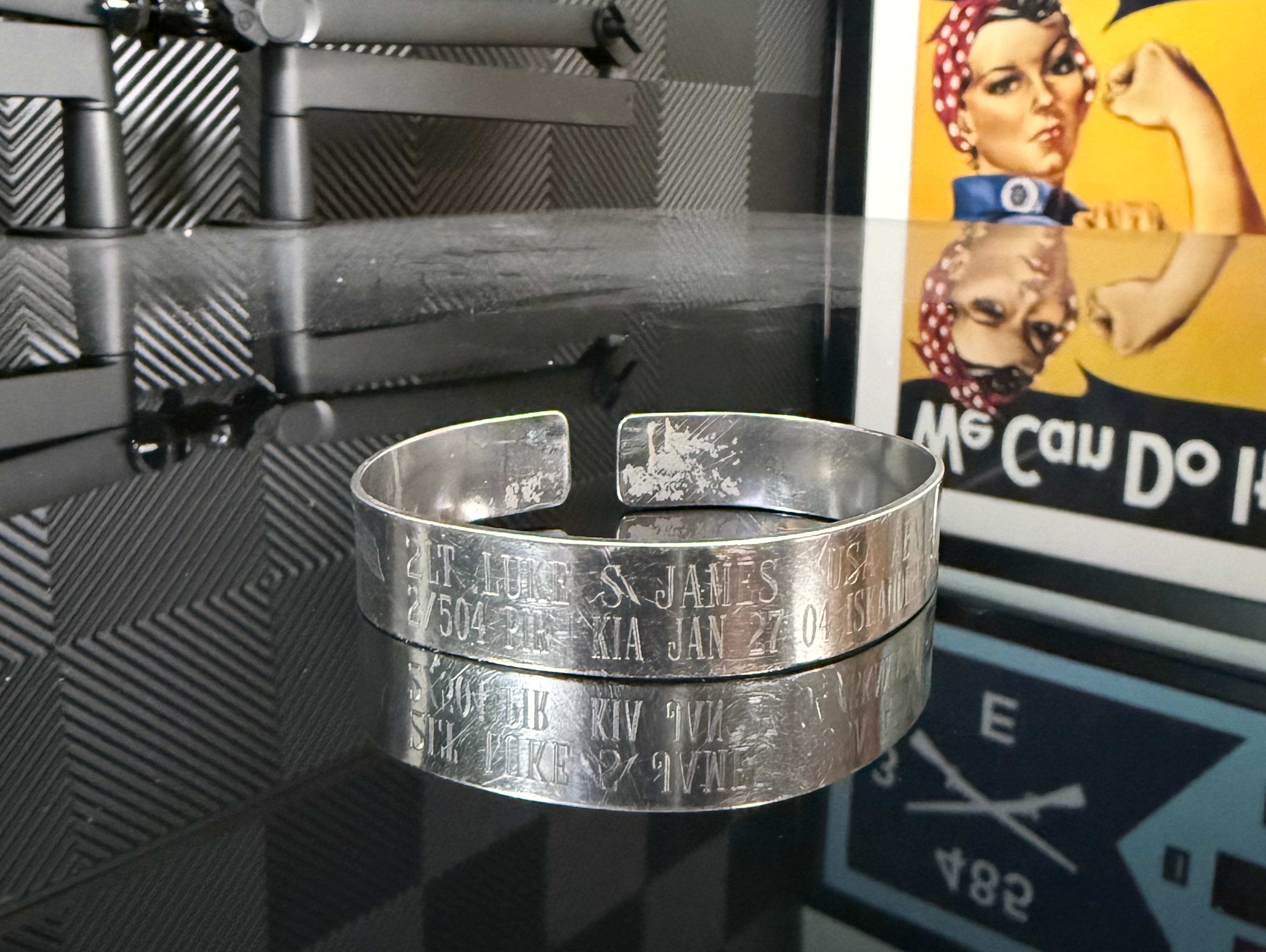
I have a silver KIA bracelet around my wrist most days. It honors Second Lieutenant Luke S. James, United States, Airborne, Bravo Company, 2/504 PIR. Killed in action January 27, 2004, Iskanderya, Iraq.
While I had never directly exchanged words with Lieutenant James, I knew his wife. When he deployed, he left behind an infant he would never see again. My former spouse deployed on the same mission. He came home. Lieutenant James didn’t.
The bracelet is my reminder: every breath I take is borrowed. Every day I get is grace.
So when I slide the packet of hot dog buns across the checkout counter and the cashier says, “Happy Memorial Day,” I see the bracelet catch the light. I think of his son, his wife, where they might be today. I hope they’ve found peace. I hope they’re doing well.
But happy feels like the wrong word for this day.
Most civilians don’t know that Memorial Day isn’t Veterans Day. They don’t know that “thank you for your service” feels strange when we’re thinking about the people who didn’t come home. They don’t know that for those of us who served—especially women veterans—this day brings up complicated grief that doesn’t have civilian language.
In 2022, our team published a blog post titled “How to Honor the Fallen on Memorial Day: 5 Ways.” It’s been one of our highest-performing pieces of content. People loved it. They shared it. It helped. And yet, it wasn’t good enough.
We knew then what we know now: listicles don’t hold the weight of this day. “5 easy ways” doesn’t capture what it means to carry someone’s name on your wrist. But sometimes you have to meet people where they are, and then later—when they’re ready—give them the depth they deserve.
This is that depth.
In 2019, I assembled a group of ten women veterans to march in the St. Clair Shores Memorial Day Parade—one of the largest in the country. It was a day filled with patriotism, honoring the fallen, and openly expressed appreciation.
We will never do it again.
Three hours in the staging area. Multiple marching bands practicing simultaneously. Cheerleaders. Revving engines. Then rain. By the time we started the parade route, our clothing was soaked through, undergarments showing through our shirts.
We started out walking and waving, carrying the photos and stories of fallen military women on our bodies. But fairly quickly, we came to terms with the fact that it felt wrong to “smile and wave” as a way to honor the fallen. So we marched the rest of the route in silence. It wasn’t something we planned. It was just what felt right.
The sights, sounds, stimulation sent each of us into sensory overload. We—women with deep connection to this holiday—were triggered by the very event intended to honor it.
Here’s what nobody tells you: Military grief is mission-based. We remember people we worked alongside, deployed with, whose lives were tied to ours through shared purpose. When they die, we don’t just lose a friend—we lose our witness. The person who understood what we did, who we were in that context.
And for those of us still here, there’s survivor’s guilt. The “why them and not me” that sits in your chest. The wondering if you should have been the one who didn’t make it home. The weight of still breathing when they aren’t.
For women veterans, this can hit different. We already have fewer people who understand our military experience. We already struggle to explain what it was like being one of the only women in the room, in the unit, in the deployment. When we lose someone who got it—the isolation intensifies.
Civilian Memorial Day doesn’t have language for that.
Here’s the truth many non-military don’t understand: The way you honor the fallen depends on who you are and what you need.
There is no “right way” to do Memorial Day as a veteran. There’s only your way.
Some of us need to be at the parade, surrounded by people, actively participating. We process externally. We need to see it, say it, do it with others.
Some of us need to skip the BBQ entirely. Silence. Alone time. Space to remember privately. We process internally first, then maybe—maybe—we’ll talk about it later.
Some of us need intense connection in short bursts. We’ll show up to the ceremony, then disappear. We need recovery time. To civilians, that looks “inconsistent” or “flaky.” It’s not. It’s survival.
Some of us need community but can’t ask for what we need. We end up surrounded by people at BBQs feeling completely alone because we haven’t learned how to say: “I need you to ask me three times before I’ll say yes” or “I need you to just sit with me without talking.”
The problem isn’t that civilians don’t care. The problem is that we don’t have shared language for different types of grief.
Honoring the fallen looks different for each of us. And doing it in a way that feels safe and right to you individually—that matters.
When you understand your own pattern—how you process, what you require, when you need space versus connection—you can be proactive in creating safe situations for yourself instead of reacting to feelings of discomfort. You stop apologizing. You stop forcing yourself into other people's expectations of what grief "should" look like.
That’s why I created the Wildflower Assessment. Not to tell you the “right way” to honor the fallen, but to give you language for your way. To help you recognize that what works for someone else might not work for you, and that’s not a flaw.
Memorial Day is about honoring the fallen. Deep reverence for their lives. Gratitude for what we have because of them. And understanding your own pattern helps you do that in a way that honors both them and the reality of how you carry that grief.
So what do women veterans actually need on this day?
The space to process in whatever way is best for her.