
The Obligation Override: What Moms in the Military Carry — And What Happens After
If you served in uniform and raised children inside that system, this terrain has a name.

More than half of women veterans do not have children. Which means those who do are navigating something most of the room has never had to think about — and rarely has language (or patience) for. This piece is to help us understand them. Nicole Stott is a wellness professional and contributor to the Mission Wildflower community. What she names here is real terrain.
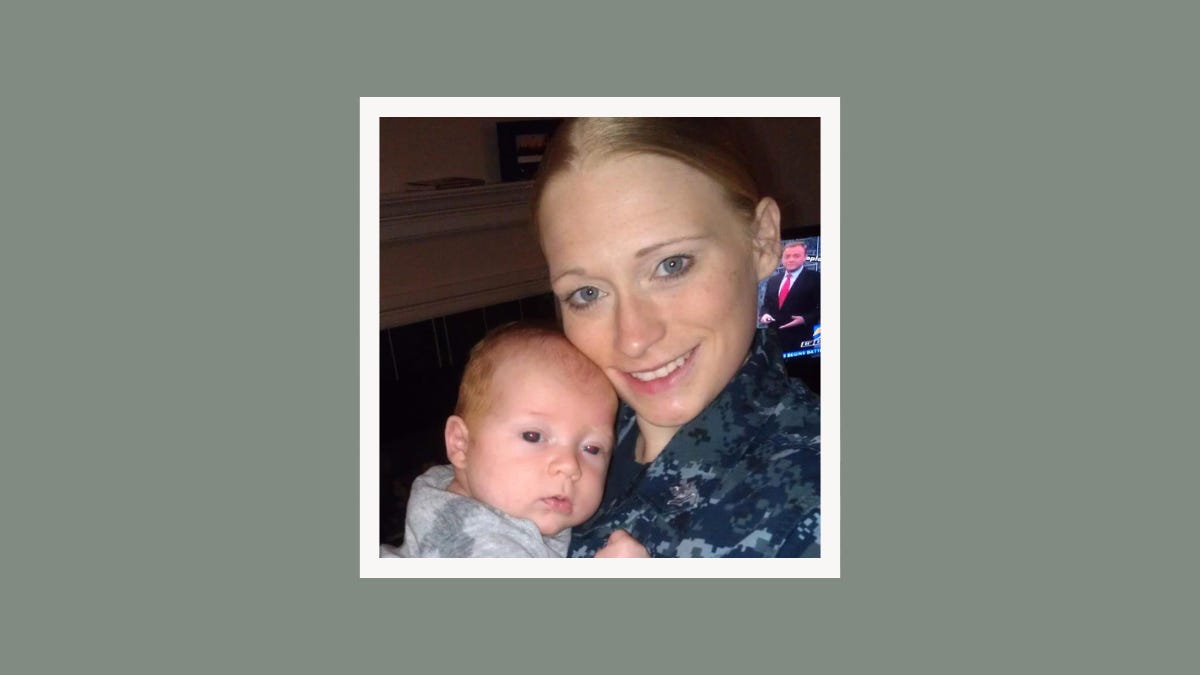
“Moms in the military don’t get enough credit, period.”
That thought didn’t come to me in some big, dramatic moment.
It came quietly. In a room full of women who looked like they had it handled.
There were ten of us in that leadership course. Half women. All senior enlisted. On paper, everyone in the room is squared away. High performers. Leaders. The ones others rely on.
And still, every single one of us was carrying something beyond just being there.
One mom was pumping between sessions, timing it around breaks, quietly managing something no one else in the room had to think about.
Another had a one-year-old at home with the flu. Couldn’t miss class. So she rearranged childcare on the fly and kept showing up like nothing was off.
And no one made a big deal about it.
Because that’s what we do.
We just handle it.
That’s the part no one really talks about.
When you’re a mom in the military, you don’t sit around analyzing how hard it is. You don’t stop to quantify the load. You don’t ask for recognition.
You just do what needs to be done.
When I was on active duty, I had my first son. I was working full-time, expected to pass PT tests, stay within standards, stand duty, and doing it all without family nearby.
My husband had recently separated from the military, was in school full-time, and was working a management job.
He was juggling a lot, too.
No extra help. No nearby support system. No margin.
Just two people carrying a lot and figuring it out as we went.
And you do.
Then later, in the reserves, it didn’t necessarily get easier, it just looked different.
I traveled overseas for short stints — trainings, conferences — but I was also a nursing mom.
So now it wasn’t just showing up and performing.
It was logistics.
Where am I pumping? How am I storing milk? Can I travel with it? What are the rules at the airport? What happens if I forget something?
Because if you forget one piece of that system while you’re overseas, you’re stuck.
And none of that replaces your actual job.
You’re still expected to perform. Lead. Be present.
So you carry both.
And you don’t question it.
But here’s the part that matters: what happens when the structure that held all of that goes away?
The Promise
I’m going to show you how to recognize when you’re operating inside the Obligation Override so that you can rebuild a relationship with your body that works in this terrain, and take back ownership of your physical wellness without needing external structure to enforce it.
Framework Introduction
This terrain has a name: The Obligation Override.
And if you were a mom in the military, you’ve already been operating inside a version of it — you just didn’t have to see it yet.
Because in uniform, the structure was still there.
Even when it was hard. Even when it was a lot.
PT tests. Standards. Schedules. Your body wasn’t optional.
But layered on top of that was something else: responsibility stacking.
Family. Career. Logistics. Leadership.
You learned how to carry all of it at once.
And you got good at it.
Now take that same skillset and remove the structure.
No one is making you work out. No one is tracking your performance. No one is enforcing anything.
But the obligations are still there.
Work. Family. People who need you. Things that matter.
So the double bind looks like this: if you prioritize your body, something else has to give. If you don’t, your body slowly absorbs the cost.
Neither option feels clean.
If at least three of these are true:
No map
No training manual
A double bind
Success metrics have collapsed
Tension in either choice
You’re not failing. You’re in the wilderness.
How It Works
Here’s what makes this harder than it looks from the outside.
In uniform, the structure forced her body onto the priority list. PT tests, standards, schedules — her body wasn’t optional. The institution held that line for her, even when everything else was also demanding her.
Out of uniform, the structure is gone. But her capability didn’t leave with it. She’s still the person who can carry a lot. She still handles things. She still figures it out. And because she’s so good at it, no one — including her — notices that her body has quietly moved to last. Her competence is the pull. The better she is at managing everything else, the longer her body waits. The cost stays quiet because she never stops functioning.
And then someone who means well says: it’s about priorities.
They aren’t wrong. But they’re saying it from terrain that doesn’t have an avalanche in it.
What they can’t see from where they’re standing is that other things don’t just politely step aside when she decides to move her body back to the top. They pile on.
They stack. Some of them are genuinely urgent. Some of them are other people’s needs that she’s wired to meet before her own. Trying to force her way back to the top of her own list can feel like climbing out of an avalanche while it’s still moving.
That’s what makes this terrain. It’s not a discipline problem. It’s not a motivation problem. The pull is that her greatest strength — the ability to carry the load without complaint — is exactly what keeps her buried.
Story Time
There was a woman in that leadership course who said something simple, but it stuck.
“I feel like I’m really good at taking care of everything except myself.”
Said matter-of-fact. No drama in it.
And that’s what made it land.
From the outside, she looked solid. She was leading. Showing up. Handling things.
But when she walked through her week, she realized something: her body only got attention if nothing else needed her.
Which meant it rarely did.
That was the moment of recognition. Her placement was off.
She didn’t need to become someone new. She needed to stop putting herself last by default.
So she made one shift: she chose where her body went in her day before everything else tried to claim that space.
Imperfectly. Inconsistently. But intentionally.
And over time, she didn’t just get back into working out. She stopped negotiating whether she deserved to.
The Assignment
Here’s what I want you to do:
Audit your current placement. Not what you intend to do — what actually happens. Where does your body fall in your day right now?
Choose a fixed position. Pick a place for movement that happens before most of your obligations stack up. Early doesn’t mean 5am — it means before everything else takes over.
Reduce the barrier. You don’t need an hour. You need consistency. 10–20 minutes count. The goal is to reestablish ownership.
Stop earning it. You don’t have to finish everything else first. Taking care of your body is a baseline.
Hold the line without perfection. You will miss days. That’s part of this terrain. The win is returning without resetting your identity every time.
And if you need something that actually fits into this kind of life — short, effective, and realistic — that’s exactly why I built my workouts.
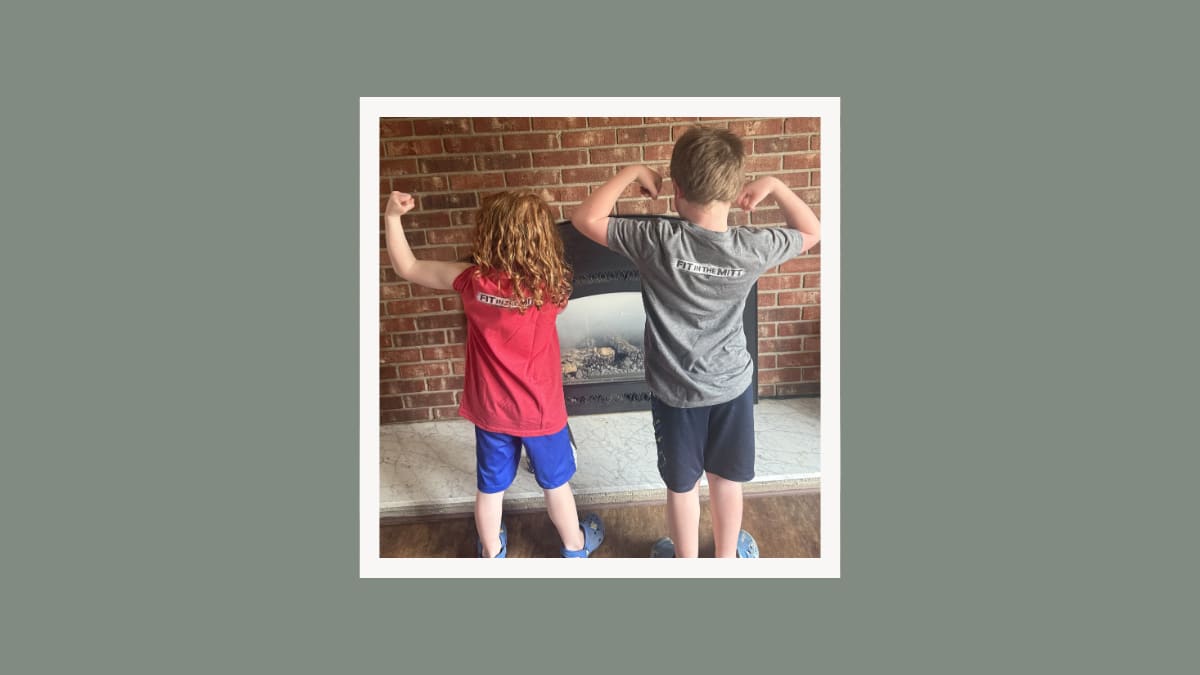
Fit in the Mitt is designed for this terrain: 30 minutes or less, minimal equipment, less than $1/day, military and veteran discount available.
Check it out at www.fitinthemitt.shop and join the free community for extra support: https://www.facebook.com/share/g/18t8s8nrxF/
The Landing
Externally, this might look small. Short workouts. Less pressure. More consistency.
Internally, it’s a shift in identity. You stop being the person who handles everything except herself. You start being someone who includes herself in the equation.
Whether you say it out loud or not, people are watching how you take care of yourself. What you prioritize. What you’re delaying. What you quietly decide isn’t yours to hold anymore.
You carried a lot in uniform. You carried even more as a mom doing it inside that system.
This isn’t about proving you can still handle everything. It’s about deciding what belongs to you now.
Your body isn’t separate from your life. It’s part of it.
And placing it accordingly? That’s the shift.
This is the terrain the Mission Wildflower community is built to hold. If you’re navigating it — as a mom, as a veteran, as both — you don’t have to map it alone. Join us at join.othersoverself.com.